TL;DR: A verified five-star review for a Utah restoration company points to four traits worth checking before you hire anyone for water, fire, or mold damage: a long operating history, follow-through on what was promised, honest and fair pricing, and real ties to the local community. Here’s what each of those actually looks like on a real job, and how to check for the same signals in any company you’re vetting.
If you’re reading restoration company reviews right now, you’re probably standing in a house with a problem in it and a short list of names you don’t know yet. That’s the moment a review like this one is supposed to help with, not the five-star number at the top, but what the reviewer actually describes happening.
Jared Decker and Team are exceptional! They’ve been in business a long time and for good reason. They do exactly what they say they will do! Honest, fair, and super involved in the community are part of their fabric. Can’t recommend them enough. If you need an awesome restoration company, they are your pick!
, verified Google review (August 2026)
What does it mean when a restoration company has “been in business a long time”?
Longevity in restoration usually means the company has survived enough insurance claims, inspections, and repeat customers to build a real track record, not just a website. A company that folds after a few bad jobs doesn’t make it past year three.
FIX Restoration has operated in Utah County since 2012, which puts more than a decade of water, fire, mold, and storm jobs behind the crews doing the work today. That history matters practically: longer-tenured companies tend to have deeper relationships with local adjusters, which can speed up how fast a claim gets approved, and more technicians who’ve seen the odd failure mode (a slow leak behind tile, smoke that traveled further than it looked) that a newer crew might miss.
When you’re checking a company’s history yourself, look past the “founded” date on the homepage. Check how many Google reviews have accumulated over how many years, and whether the licensing and insurance info is easy to find rather than buried.
Why does “they do exactly what they say they will do” matter so much in restoration work?
This line matters because restoration jobs are built on a written scope that’s easy to quietly shrink once the drywall is open. A company that does what it says delivers the scope it quoted, on the timeline it quoted, without scrambling to justify a surprise invoice line later.
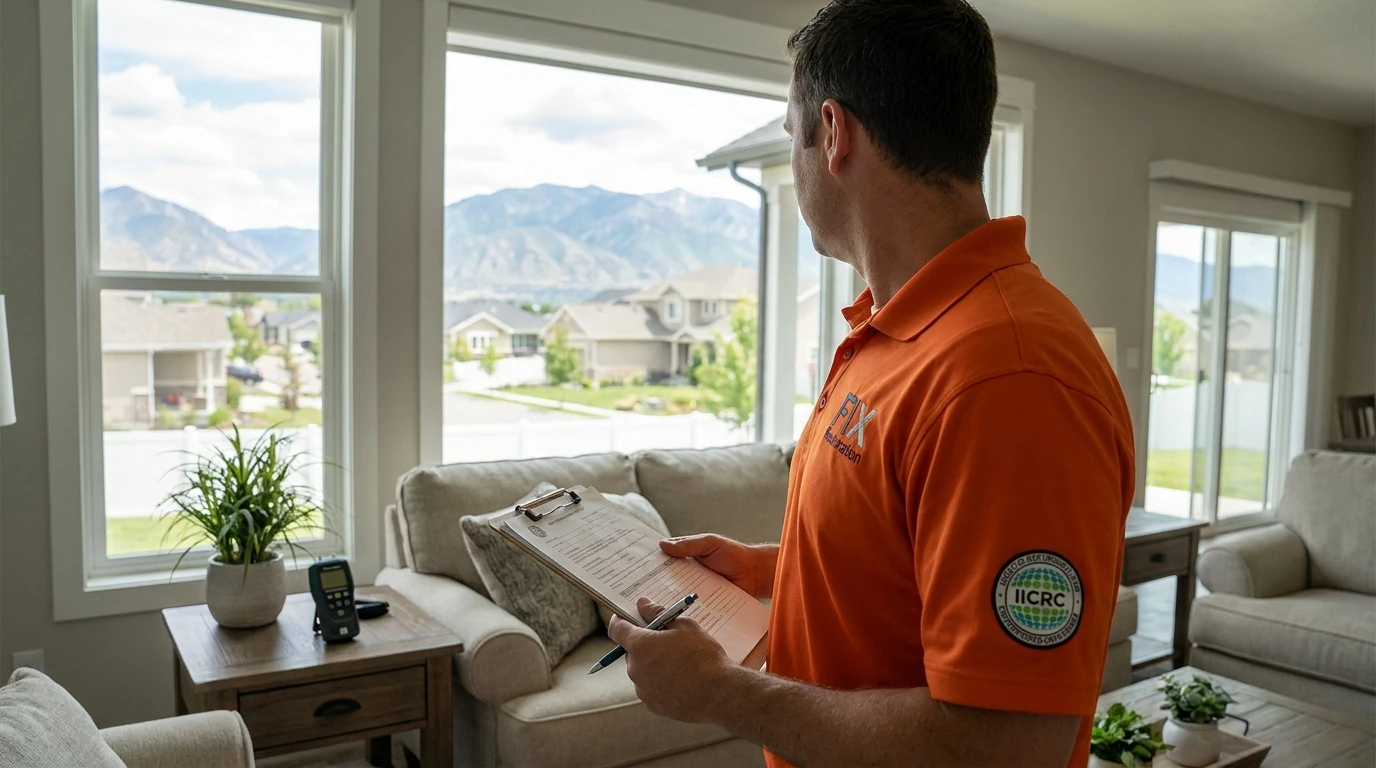
In practice, that shows up in small, checkable things: a written estimate before demo starts, daily drying logs with moisture readings if it’s a water loss (dried to the IICRC S500 standard), and a final walkthrough where the scope on paper matches the work on the walls. If a contractor won’t put the scope in writing before work begins, that’s the moment to ask why.
Our guide to choosing a restoration company covers the specific questions to ask before you sign anything, including how to read a scope of work line by line.
What does “honest and fair” actually look like in a restoration bill or insurance claim?
Honest and fair pricing means the invoice matches the documented scope, with no padded line items and no pressure to sign a blank authorization form. It also means the company tells you plainly when something isn’t covered rather than letting you find out from the adjuster.
Most homeowners policies cover sudden, accidental water or fire damage but exclude gradual leaks and flood water from outside the home, according to the Insurance Information Institute. A fair contractor explains that distinction up front instead of promising full coverage to close the sale. They document moisture readings, photos, and material removal as the claim is built, which protects you if the adjuster has questions later.
If you’re still working through what your policy actually pays for, our plain-English guide to water damage coverage walks through what’s typically covered and what isn’t.
Why does community involvement matter when you’re picking a restoration company?
A company with real local ties has more at stake in getting the job right, because its reputation in that community is its main source of new work. Local accountability tends to show up as faster callbacks and more willingness to fix a problem quietly rather than argue about it.
It’s also a practical filter: a company that sponsors a local youth league or shows up at a county fair isn’t running a call-center operation from out of state. They’re licensed and insured locally, their crews live in the area they serve, and their next job is likely to be for someone who knows your neighbor.
If a review like this one describes a crew that followed through, priced fairly, and stuck around long enough to build a name in the community, that’s a company worth getting a written estimate from. Call FIX Restoration at (801) 930-9750 to schedule a damage assessment if you’re dealing with water, fire, mold, or storm damage anywhere in Utah County.
Written by Scott Noland, FIX Restoration