TL;DR: Mold remediation in American Fork typically runs $500 to $1,200 for a small, contained surface job and $3,000 to $7,000 or more for a basement, crawl space, or multi-room job that requires containment, material removal, and clearance testing. The biggest cost drivers are square footage affected, how much porous material (drywall, insulation, carpet) has to come out, and whether the moisture source itself needs repair.
If you just got a mold inspection report back, or you spotted a musty smell in the basement after last spring’s snowmelt and you’re trying to figure out whether you’re looking at a $600 bill or a $6,000 one, the honest answer is: it depends almost entirely on how far the moisture traveled before anyone noticed. Here’s what actually moves that number in American Fork and the surrounding Utah Valley.
What Does Mold Remediation Typically Cost in American Fork?
Most remediation jobs in Utah County fall between $500 and $7,000, with the number driven by scope, not by zip code. A small bathroom or closet with visible surface mold on under 10 square feet sits at the low end. A basement with a hidden moisture source and soaked drywall sits at the high end.
| Scope of Job | Typical Cost Range |
|---|---|
| Small bathroom or closet, surface mold only (under 10 sq ft) | $500 - $1,200 |
| Single room with contained drywall or insulation removal | $1,500 - $3,500 |
| Basement or crawl space with a moisture source to address | $3,000 - $7,000 |
| HVAC contamination (duct cleaning plus remediation) | $2,000 - $6,000 |
| Whole-house or multi-room job with structural drying | $7,000 - $15,000+ |
These are typical industry ranges reported across Utah and the broader Mountain West, not a fixed quote for any specific property. A real number comes from a written scope after someone has actually looked at the affected area.
What Factors Push the Price Up or Down?
The price scales with three things: how much area is affected, how much material has to be removed, and whether the moisture source is fixed or still active. Get those three right and you can estimate the ballpark yourself before anyone shows up.
Affected square footage matters most. The EPA’s mold guidance draws a line at 10 square feet: below that, a homeowner can often handle cleanup with standard precautions. Above it, professional containment becomes the standard approach, and cost rises with the footprint.
Material removal is the second driver. Drywall, carpet pad, and insulation that have absorbed moisture are porous and generally can’t be fully cleaned, only removed and replaced. A job that only needs surface cleaning on non-porous tile costs far less than one where soaked drywall has to be cut out, bagged, and hauled.
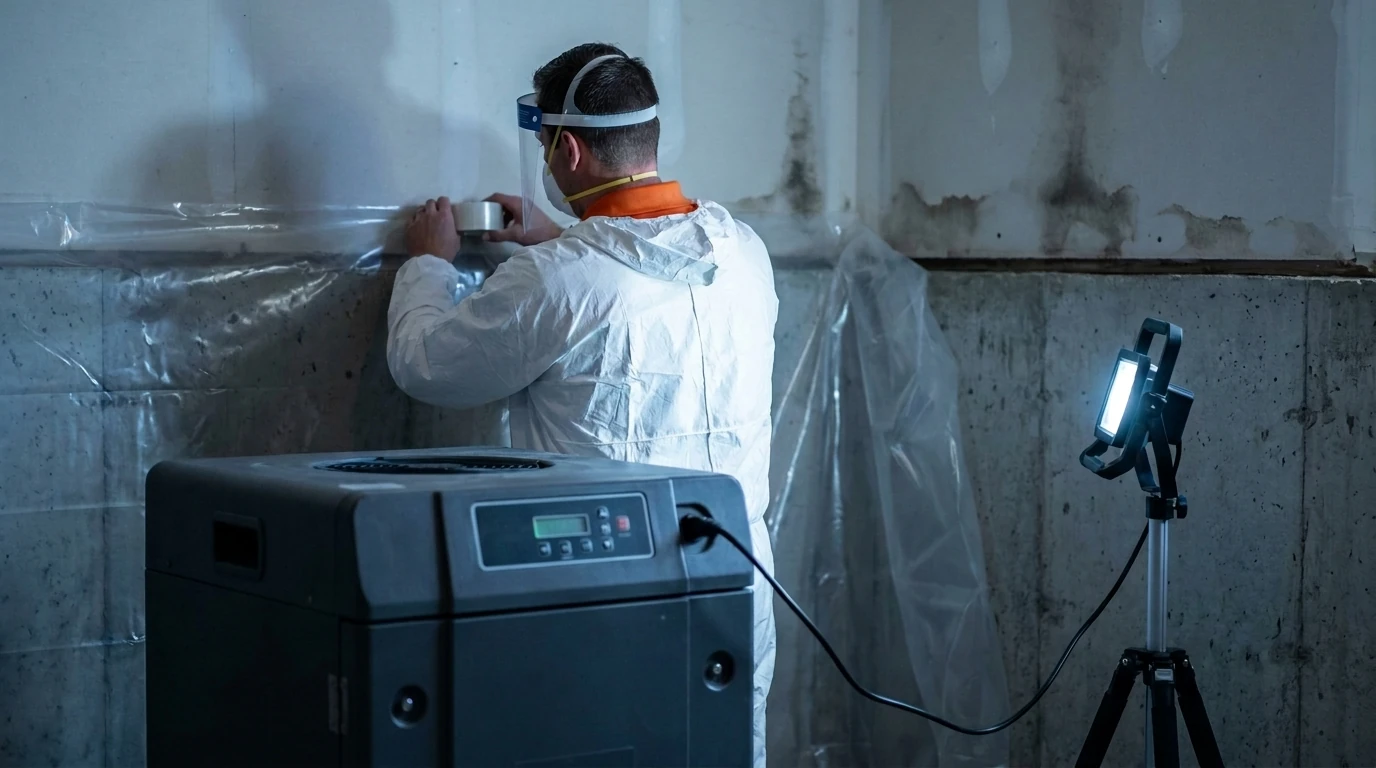
Containment and air scrubbing add a fixed cost regardless of square footage. Sealing the work area in poly sheeting and running a HEPA air scrubber under negative pressure, the practice described in the S520 standard for mold remediation, keeps spores from spreading to the rest of the house during the work. Skipping it is how a one-room problem becomes a whole-house problem.
Finally, if the moisture source (a slow plumbing leak, a grading issue pushing water toward the foundation, condensation on an uninsulated crawl space) isn’t fixed first, the remediation won’t hold. That repair is usually a separate line item from the mold removal itself.
Will Homeowners Insurance Cover Any of It?
Insurance usually covers mold remediation only when it results directly from a sudden, covered event, like a burst pipe or appliance failure, not from long-term humidity or a maintenance issue. That distinction decides more claims than any other factor.
If a pipe burst and mold grew within days because nobody caught it, most policies treat the resulting mold as part of the water damage claim. If moisture built up over months from poor ventilation or a slow, unnoticed leak, insurers typically classify that as a maintenance issue and deny it. Many policies also carry a separate, lower sublimit specifically for mold damage, even when the water event itself is fully covered.
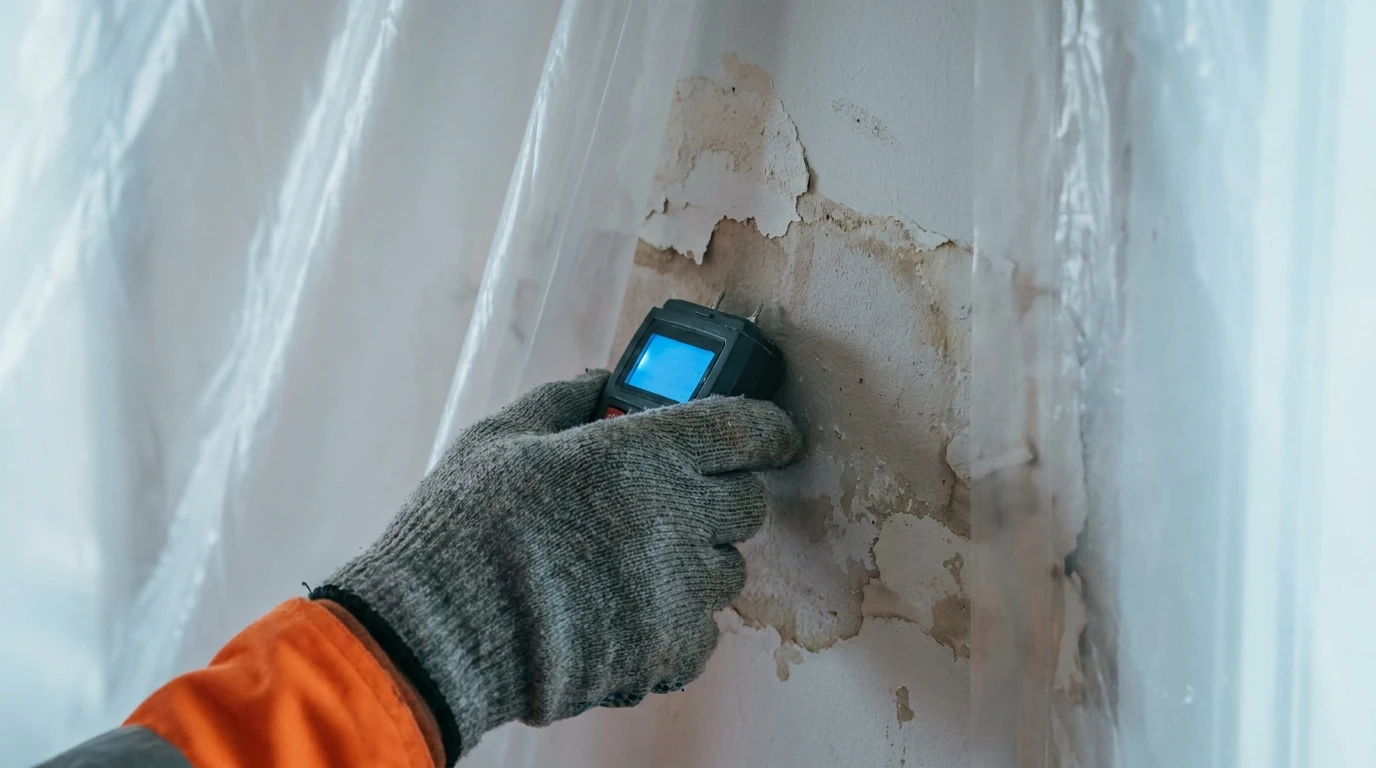
Documentation is what protects a borderline claim: photos of the source, moisture readings, and a clear timeline of when the leak started. If you’re not sure how your situation fits your policy, our related guide on how soon mold grows after water damage walks through the timeline insurers look at.
What Does the Remediation Process Actually Involve?
A proper remediation job follows a set sequence: containment, removal, cleaning, and clearance testing, in that order, every time. Skipping a step is the most common reason mold comes back.
- Containment - poly sheeting seals off the work area and a HEPA air scrubber runs under negative pressure so spores don’t spread.
- Removal - affected porous materials (drywall, insulation, carpet) are cut out and bagged for disposal; non-porous surfaces are cleaned instead of replaced.
- Cleaning - remaining surfaces are treated with an antimicrobial and HEPA-vacuumed.
- Drying - the area is brought back to a normal moisture level and verified with a meter, not a guess.
- Clearance testing - an independent air or surface sample confirms spore counts are back to a normal range before containment comes down.
If you want to understand the difference between what you’re seeing and what actually needs this process, our post on black mold versus regular mold and our DIY vs. professional mold testing guide are both good next reads before you call anyone.
Who Should You Call for Mold Remediation Near American Fork?
For anything beyond a small, surface-level spot near American Fork Canyon or along the American Fork River corridor, a licensed remediation crew that follows the S520 standard is worth the call, especially if the area affects more than 10 square feet or there’s a hidden moisture source involved. FIX Restoration, based in American Fork, handles mold assessments and remediation across Utah County and provides a written scope before any work starts, so the cost isn’t a surprise.
A proper assessment usually settles the uncertainty fast: how much area is really affected, whether the moisture source is active, and what the real range looks like for your specific job.
About FIX Restoration
FIX Restoration has served American Fork, UT and the surrounding Utah Valley since 2012. The company is licensed and insured, operates on a 24/7 basis, and handles mold remediation, water damage, fire and smoke restoration, and reconstruction across American Fork, Provo, Orem, Lehi, and nearby communities. Crews follow S520 containment and clearance standards on every remediation job.
Need help now? Call FIX Restoration at (801) 930-9750.