
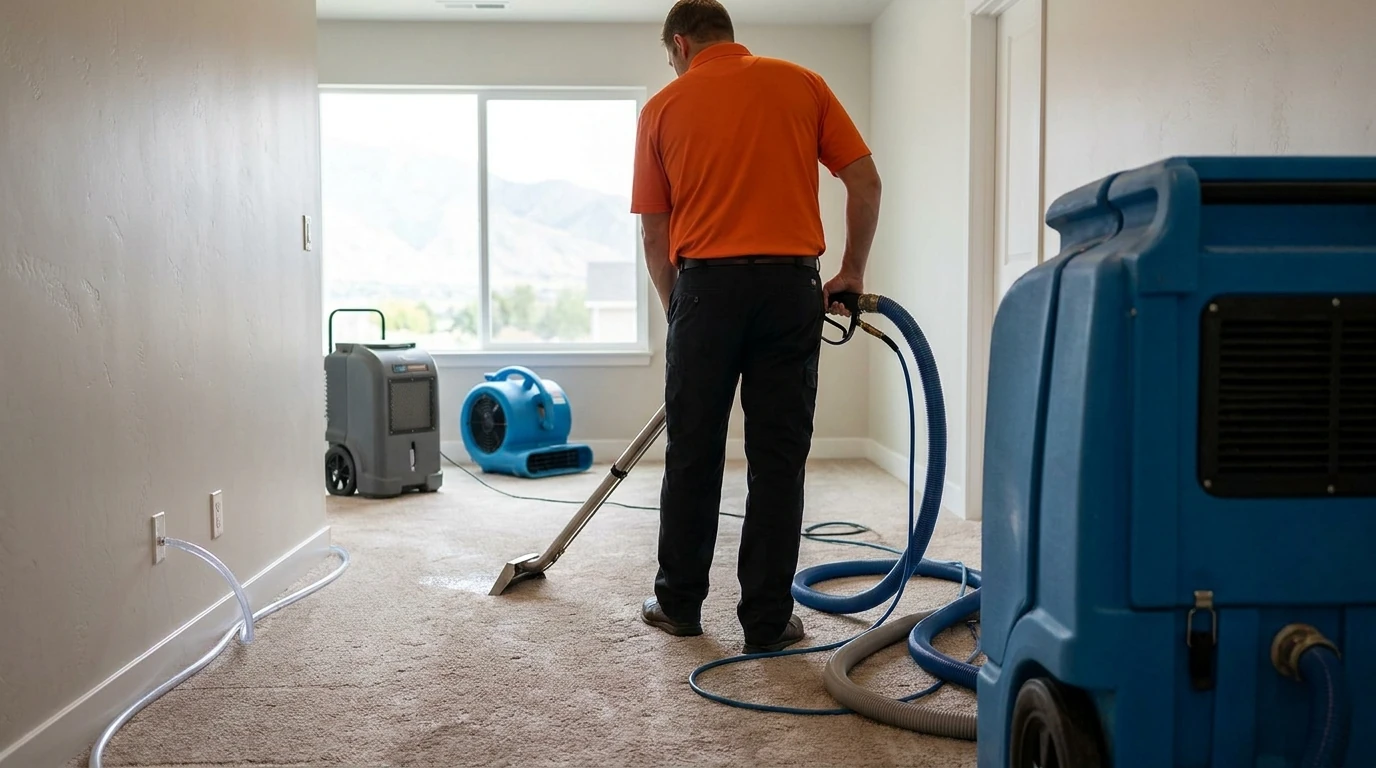
TL;DR: Water damage restoration removes standing water, dries out wet structural materials, and repairs anything that can’t be saved. In American Fork and the rest of Utah County, a typical job moves through extraction, structural drying, and repair in that order, with insurance documentation handled alongside the physical work. Most restoration companies in the area can start within hours of a burst pipe, appliance failure, or storm intrusion.
If a supply line let go behind your washing machine overnight, or a sump pump failed during spring runoff and your basement in American Fork, Lehi, or Pleasant Grove now has an inch of water across the carpet, the next 24 hours matter more than almost anything else in the process. What gets pulled out, dried, and documented now determines whether this stays a cleanup job or turns into a mold and reconstruction job.
What does a water damage restoration job actually include?
A full water damage restoration job covers four phases: extraction, drying, cleaning, and repair. Skipping any one of them is how a one-day water event turns into a multi-week problem.
- Emergency water extraction: Pulling standing water with truck-mounted extractors or portable pumps before it wicks further into flooring, baseboards, and subfloor.
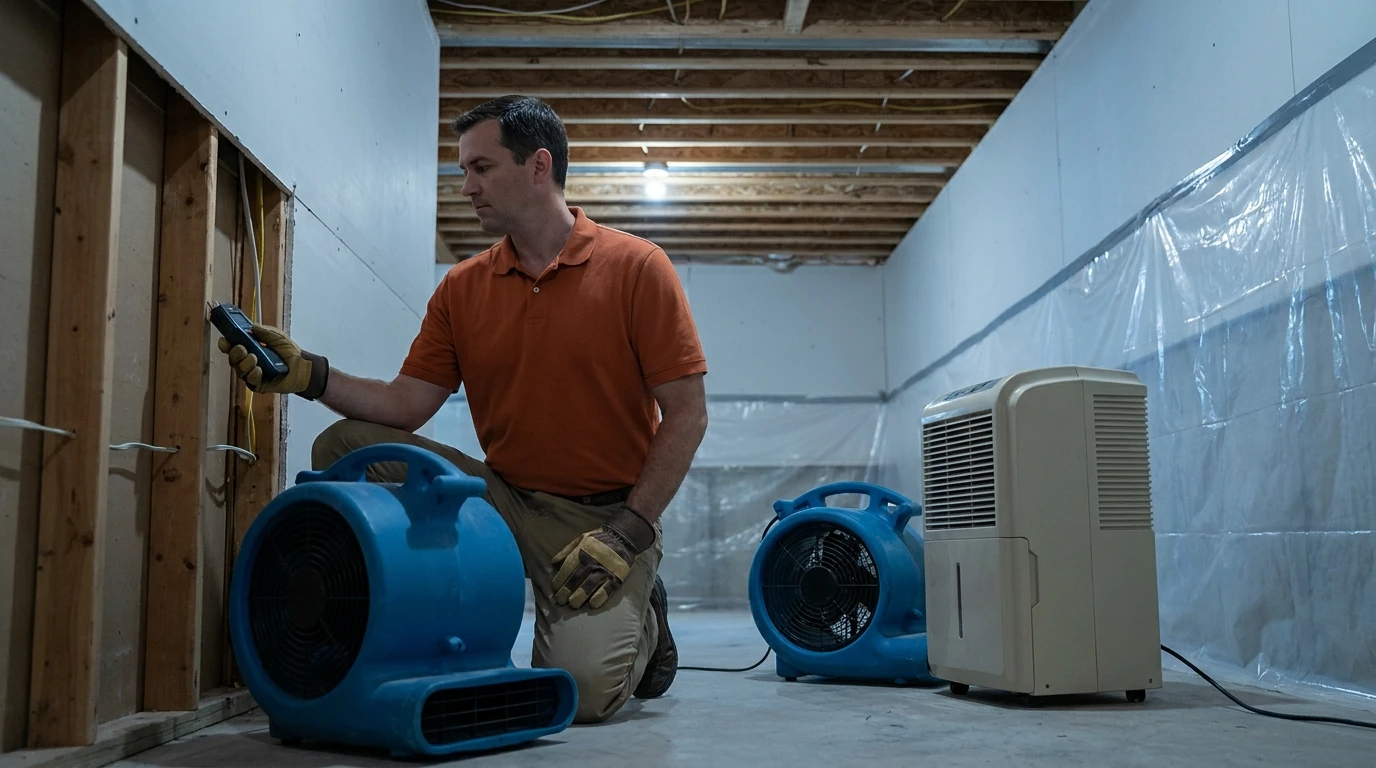
- Structural drying and dehumidification: Industrial air movers and LGR dehumidifiers positioned to dry walls, subfloor, and cavities, not just the visible surface.
- Moisture detection and inspection: Thermal imaging and penetrating moisture meters find water that migrated behind drywall or under flooring, where it won’t show up by looking.
- Repair and reconstruction: Drywall, flooring, baseboard, and paint brought back to pre-loss condition once everything reads dry.
Commercial properties and flood-level losses follow the same sequence, just scaled up with more extraction equipment and often a longer drying timeline.
How fast does water need to come out of a home?
Extraction and drying equipment should be running within 24 to 48 hours of the water event, because that’s roughly the window before mold becomes a realistic risk on wet materials, according to the EPA. Drywall, carpet pad, and untreated wood framing are the first materials to become a problem.
The category of water also changes the timeline. Clean water from a supply line behaves differently than water from a sewer backup or rising groundwater, which is considered contaminated and handled under stricter protocols, per the IICRC S500 standard. If you’re not sure which you’re dealing with, that’s a reasonable first question to ask whoever you call.
What should you look for before hiring a water damage company in Utah County?
Look for experienced technicians, a company that’s licensed and insured, and a written scope before work starts, not after. Those three things protect you if the job turns out bigger than it looked on day one.
Insurance documentation matters just as much as the physical drying. A company that photographs moisture readings, tracks equipment placement, and logs drying progress gives your adjuster something concrete to work from, which tends to move the claim faster. FIX Restoration, based in American Fork, documents each stage this way and coordinates directly with the homeowner’s insurer as part of the mitigation work, not as a separate add-on.
If you’re still comparing options, our guide on choosing a restoration company walks through the specific questions worth asking before you sign anything.
When is it a job for a professional instead of drying it out yourself?
It’s time to call a professional once the water has touched more than a small, contained area, sat for more than a few hours, or come from anything other than a clean supply line. A box fan and an open window dry the surface; they don’t dry subfloor or wall cavities.
Sewage backups, groundwater intrusion, and anything involving standing water for more than 24 hours fall outside safe DIY territory; these are treated as contaminated water under IICRC guidelines and need PPE, antimicrobial treatment, and often removal of porous materials rather than just fans. A small, fresh leak you caught within the hour and fully dried within a day is usually fine to handle yourself, provided you check back for hidden moisture over the next few days.
If you’re in that first 24-hour window right now, our first-24-hours checklist covers what to do before help arrives.
Water damage doesn’t get better by waiting a day to decide. Whether the source was a failed water heater in Orem or storm intrusion through a roof seam in Highland, the same sequence applies: stop the source, get water out, get air moving, and get it documented for your insurer.
About FIX Restoration
This post was prepared with the restoration team at FIX Restoration, which has served American Fork and the surrounding Utah County cities, including Provo, Orem, Lehi, and Pleasant Grove, since 2012. The company is licensed and insured, staffs -trained technicians, and holds a 4.9 rating across more than 550 Google reviews from local jobs.
Need help now? Call FIX Restoration at (801) 930-9750.