
TL;DR: For water mitigation in American Fork, UT, call a licensed water damage restoration company, not a general handyman, as soon as the water source is stopped. FIX Restoration (801) 930-9750 answers 24/7 and can get extraction equipment running the same day. If the water is still actively flowing, shut off the source or your main water valve first.
If you just walked into a wet basement, a bathroom with water creeping under the vanity, or a laundry room with a split supply line, your first move isn’t research, it’s a phone call. For water mitigation in American Fork, UT, call FIX Restoration at (801) 930-9750, a locally owned, licensed and insured crew that answers 24/7. From there, the triage below helps you figure out who else, if anyone, needs to be called too.
Who do you call first when water is actively damaging your home?
Call a water mitigation company the moment the water source is stopped or contained, even if it’s the middle of the night. Mitigation means pulling standing water, setting air movers and dehumidifiers, and stopping the damage from spreading into drywall, subfloor, and framing. The longer wet materials sit, the more gets torn out later, so the clock matters more than almost anything else in this situation.
If the source is still running, that call comes first: shutting off a supply valve, the home’s main shutoff, or (for a burst water heater) the cold inlet valve. A mitigation crew can’t make progress against water that’s still coming. Once the flow has stopped, a restoration company’s job is to limit everything downstream of that, the warped flooring, the soaked drywall, the mold risk that starts within 24 to 48 hours in Utah County’s humid basements.
When is it a plumber call instead, or a 911 call?
Call a plumber first only when the leak is a simple, isolated fixture failure you can shut off at the source and the water hasn’t spread beyond a small, contained area. A failed supply line under a sink, a dripping water heater fitting, or a toilet supply valve are plumbing repairs. The mitigation work (drying the cabinet base, the subfloor, the baseboard) is a separate call once the leak is fixed.
Call 911 or your utility provider immediately, before anyone touches anything, if there’s standing water near an electrical panel or outlets, a gas smell, or structural sagging in a ceiling that’s holding water weight. Those are safety hazards, not restoration jobs, and no restoration crew should enter until the hazard is cleared.
Call your insurance company after mitigation has started, not before. Utah County homeowners’ policies generally cover sudden, accidental water damage (a burst pipe, a failed appliance hose) but exclude damage from a leak that ran for weeks unnoticed. Starting the mitigation call first protects the claim: documented, dated drying progress is exactly what an adjuster wants to see. What to Do in the First 24 Hours After Water Damage walks through that documentation step by step.
What happens on the first phone call and when the crew arrives?
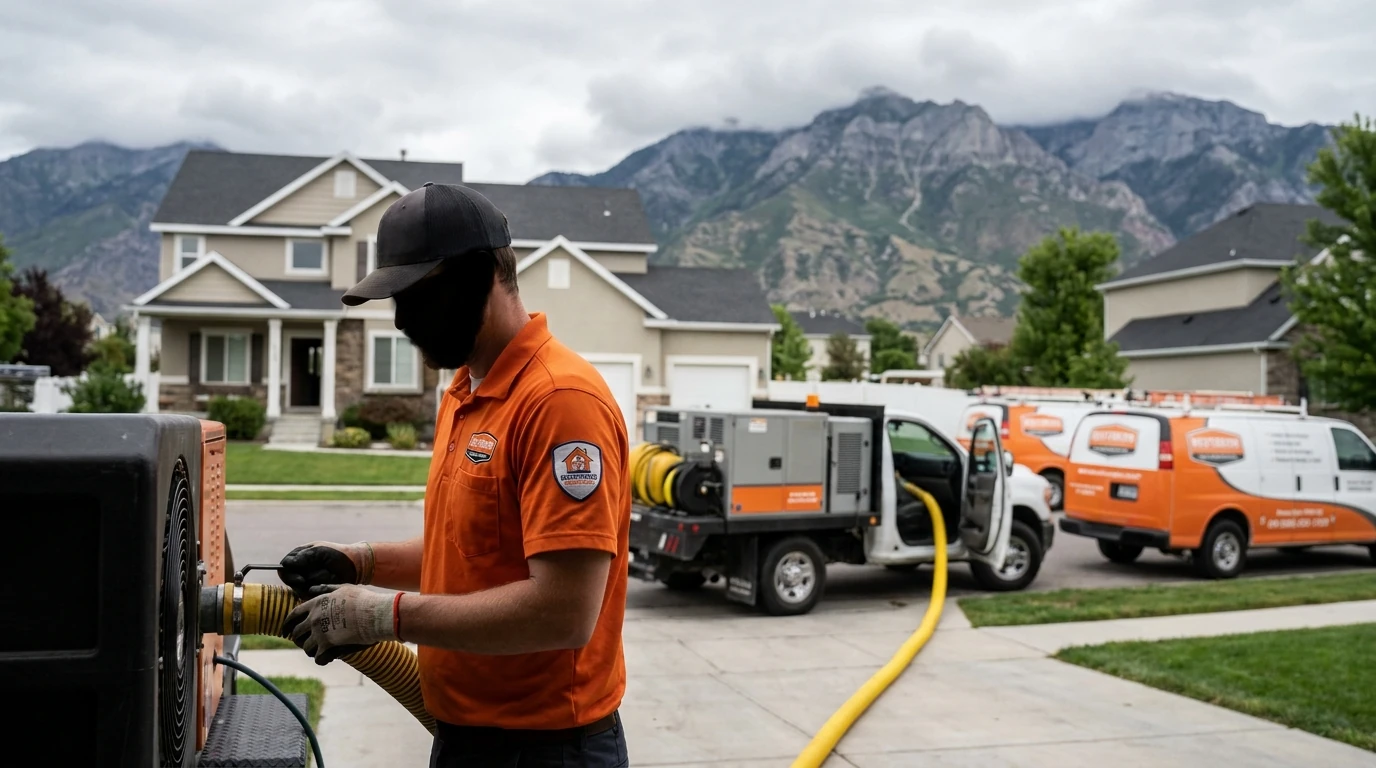
The first call is short: your address, what happened, and whether the water source is stopped. A dispatcher will ask if the water is clean (a supply line), gray (a washing machine or dishwasher overflow), or possibly contaminated (a backed-up drain or sewage line), since that changes what PPE and equipment the crew brings.
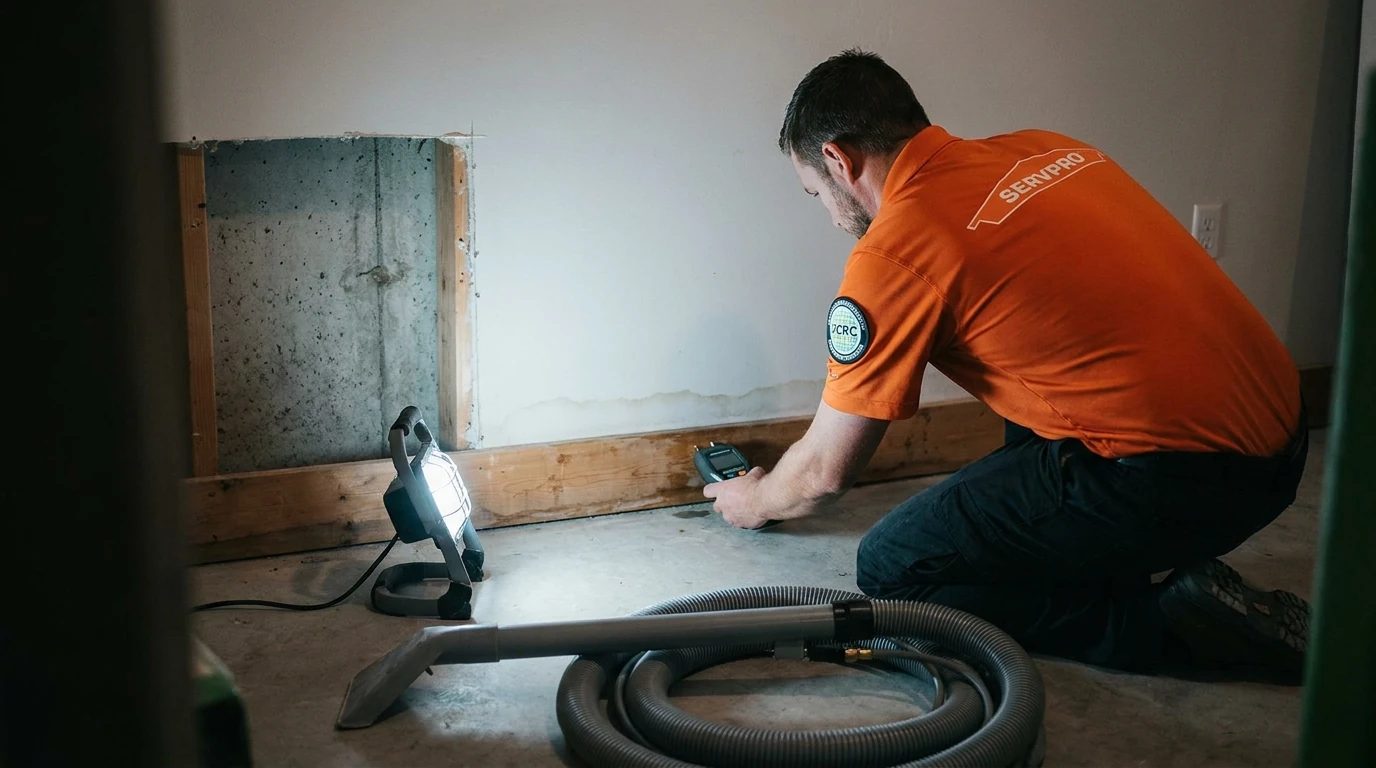
Have these ready before the truck pulls up: your insurance company’s name and policy number if you have it, the approximate time the leak started, and access to the affected area (keys, gate codes, whether pets need to be contained). On arrival, a technician walks the affected rooms with a moisture meter, documents the damage with photos, and starts extraction right away, then sets air movers and dehumidifiers to dry structural materials to the IICRC S500 standard, the industry benchmark for professional water damage drying.
When does a slow leak become a mitigation job instead of a repair?
It becomes a mitigation job the moment water has touched drywall, subfloor, insulation, or framing, even if the surface looks dry now. A damp spot that’s been there a week can already be feeding mold behind the wall. If you can see a stain, smell a musty odor, or a moisture meter reads above normal on a wall or floor, that’s a drying job, not a paint-over.
Homes along the Wasatch Front, including American Fork and the surrounding Utah County cities, sit on clay-heavy soil that holds moisture against foundations longer than sandier soils elsewhere. That makes basement slow leaks and sump pump failures a recurring call here, especially heading into freeze season when pipe failures spike. If you’re not sure whether what you’re looking at needs a mitigation crew or just a repair, a same-day water damage assessment answers that faster than guessing.
If the water’s moving and the clock is running, make the call before you make the list. Request a water mitigation assessment or call the team at (801) 930-9750 to get a technician on site and the drying documentation started for your insurer.