Industrial Restoration in American Fork
Industrial restoration in American Fork and surrounding areas. Insurance billing accepted. Call (801) 930-9750.
Industrial water damage behind a palletized storage line or fire damage in a manufacturing bay doesn’t behave like a residential loss. A cracked sprinkler head above a production floor can push thousands of gallons into subfloor trenching and electrical conduit before anyone notices, and a small electrical fire in a control panel can shut down an entire line for weeks if the soot reaches sensitive equipment. FIX Restoration works with facility managers and property owners across American Fork to get industrial sites assessed and stabilized so operations can resume on a realistic timeline.
What industrial restoration actually involves
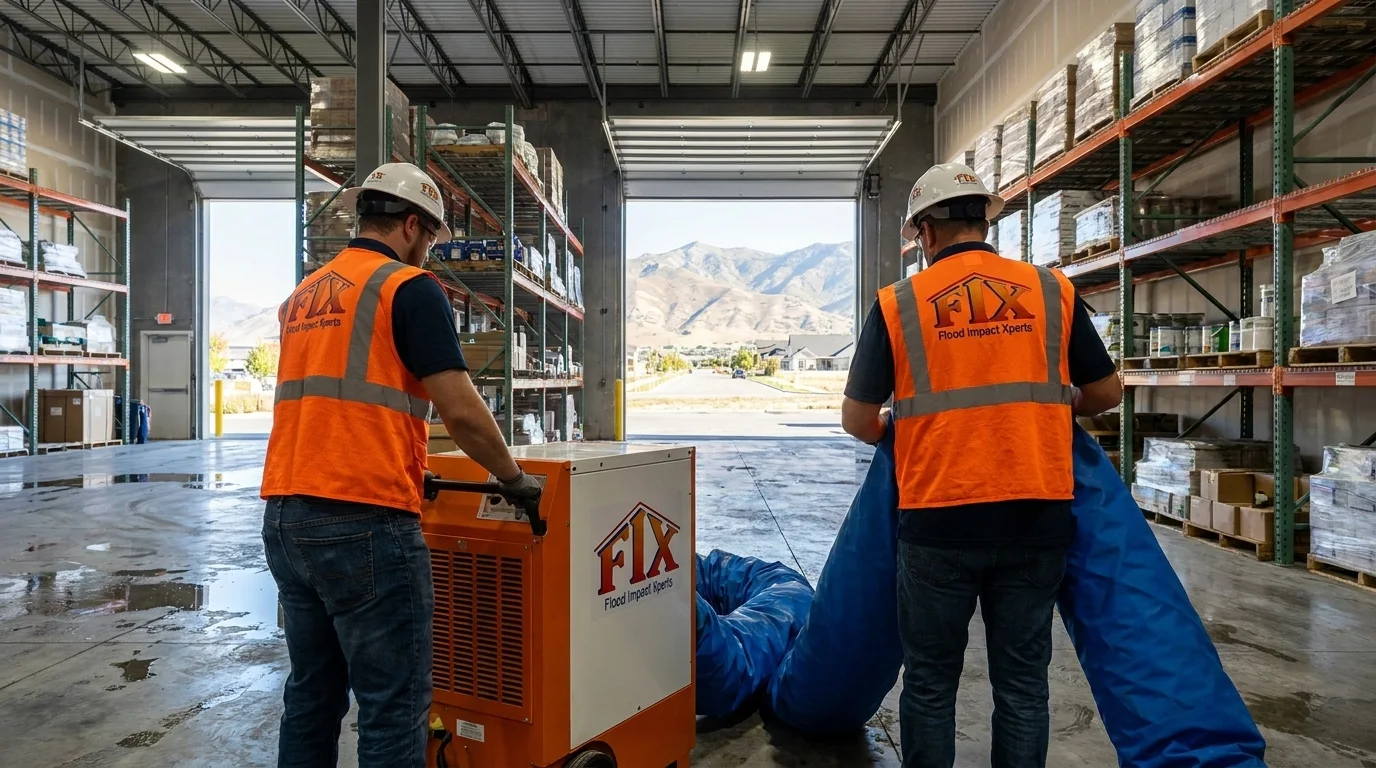
Industrial restoration covers water, fire, and smoke losses inside warehouses, manufacturing plants, distribution centers, and processing facilities, where the building systems, floor loads, and downtime costs are nothing like a house. A warehouse with a failed roof drain might have standing water across thousands of square feet of slab, soaking into rack-mounted inventory and conduit runs. A plant fire might leave soot coating HVAC returns, exposed structural steel, and control room electronics that need specialized cleaning, not just wipe-down. Equipment scales accordingly: desiccant dehumidifiers sized for large open floor plans, negative air setups to isolate a production zone from the rest of the facility, and moisture mapping across slab-on-grade concrete that can hold water in ways a residential subfloor never does. Timelines depend heavily on whether the facility can stay partially operational during the work or needs a full shutdown.
Our process
- Facility assessment and hazard check. Before any equipment goes in, we walk the affected area with facility staff to identify electrical hazards, chemical storage, and any part of the loss that intersects with regulated materials or process equipment.
- Scope by zone, not by square footage. Industrial sites get divided into functional zones (production floor, storage racking, office/admin, mechanical rooms) because drying and cleaning strategy differs by what’s stored or running in each one.
- Water extraction and structural drying, or soot and smoke remediation. For water losses, this means extraction across slab and any sub-grade trenching, with moisture monitoring logged daily. For fire losses, it means soot characterization, specialized cleaning of exposed structural members, and targeted treatment of HVAC and electrical panels.
- Equipment and inventory coordination. Racked inventory, pallets, and sensitive equipment often need to be moved, assessed, or isolated before drying or cleaning can proceed in that zone, so we coordinate move schedules with facility operations.
- Documentation for insurance and risk management. Industrial claims usually involve a risk manager or third-party adjuster, so we photograph and log affected zones, moisture readings, and material disposition at a level of detail that holds up under review.
What separates a good industrial restoration response from a bad one
The most common mistake on industrial losses is treating the whole facility as one undifferentiated space instead of scoping by zone. A crew that dries the visible floor area but skips moisture trapped under racking or inside wall cavities around mechanical rooms sets the facility up for a mold callback weeks later. On fire losses, a frequent miss is cleaning visible soot off surfaces while leaving residue inside HVAC ductwork that recirculates particulate through the whole building once systems come back online. Adjusters reviewing industrial claims generally want to see zone-by-zone moisture logs, clear photo documentation of affected inventory or equipment, and a scope that distinguishes between what was cleaned, what was replaced, and why. Facilities with process equipment or electrical panels in the affected area should also expect a separate electrical safety sign-off before power is restored to those circuits, something that gets skipped when a crew is moving fast to close out a job.
What does industrial restoration cost?
Industrial restoration costs vary more than residential work because the variables, square footage, ceiling height, racking systems, process equipment, and whether the facility needs to stay partially operational, change the labor and equipment load significantly. Every industrial loss gets a written scope before work begins so facility management and the insurance carrier know what’s included. The figures below are typical industry ranges, not a quote for any specific site.
| Scenario | Typical range |
|---|---|
| Localized water intrusion, under 2,000 sq ft | $3,000 - $8,000 |
| Warehouse-wide water loss with racking and inventory | $15,000 - $60,000+ |
| Small electrical/equipment fire, contained to one room | $8,000 - $25,000 |
| Plant-wide smoke damage with HVAC contamination | $40,000 - $150,000+ |
| Structural drying with ongoing operations (phased) | $10,000 - $35,000 |
Most commercial property policies cover sudden and accidental water and fire losses, including business interruption in many cases, but coverage for inventory, equipment, and downtime varies by policy and endorsement, so facility management should review the policy language with their broker or adjuster early.
Seasonal & regional considerations
Utah’s freeze-thaw cycle is a real factor for industrial sites around American Fork: frozen or burst sprinkler lines in unheated warehouse sections are a recurring winter loss, and roof drains clogged with snowmelt debris can back up onto flat industrial roofs. Summer brings its own risk with HVAC systems running hard and occasional power surges during peak demand, which can trigger electrical fires in older control panels.
Service area
FIX Restoration serves industrial and manufacturing facilities in American Fork and throughout Utah County, including Lehi, Pleasant Grove, Orem, and the surrounding industrial corridors along I-15.
If your facility has standing water on the production floor or soot moving through the HVAC system, call FIX Restoration at (801) 930-9750 to schedule a facility assessment and get a written scope started before the damage spreads further.
Frequently Asked Questions
Does commercial property insurance cover industrial water and fire damage?
How is an industrial water loss different from a residential one in terms of drying?
Can part of our facility stay operational while restoration work happens?
What happens to inventory or equipment that was exposed to water or smoke?
How does soot cleanup differ on industrial structural steel versus drywall?
Looking for the best industrial restoration company in American Fork?
FIX Restoration provides industrial restoration in American Fork, UT and the surrounding area, and has served local property owners since 2012. Customers rate us 4.9 out of 5 stars across 558 Google reviews. We answer calls 24/7 — call (801) 930-9750 for immediate help.
Need Industrial Restoration now?
We respond 24/7 across American Fork and surrounding UT cities.
Related Coverage
- Our Restoration Services
- Contact FIX Restoration
- Restoration Services in Alpine
- Restoration Services in Bluffdale
- Restoration Services in Cedar Fort
- Restoration Services in Cedar Hills
- Restoration Services in Cottonwood Heights
- Restoration Services in Draper
- Restoration Services in Eagle Mountain
- Restoration Services in Herriman
- Restoration Services in Highland
- Restoration Services in Lehi
- Restoration Services in Lindon
- Restoration Services in Orem