
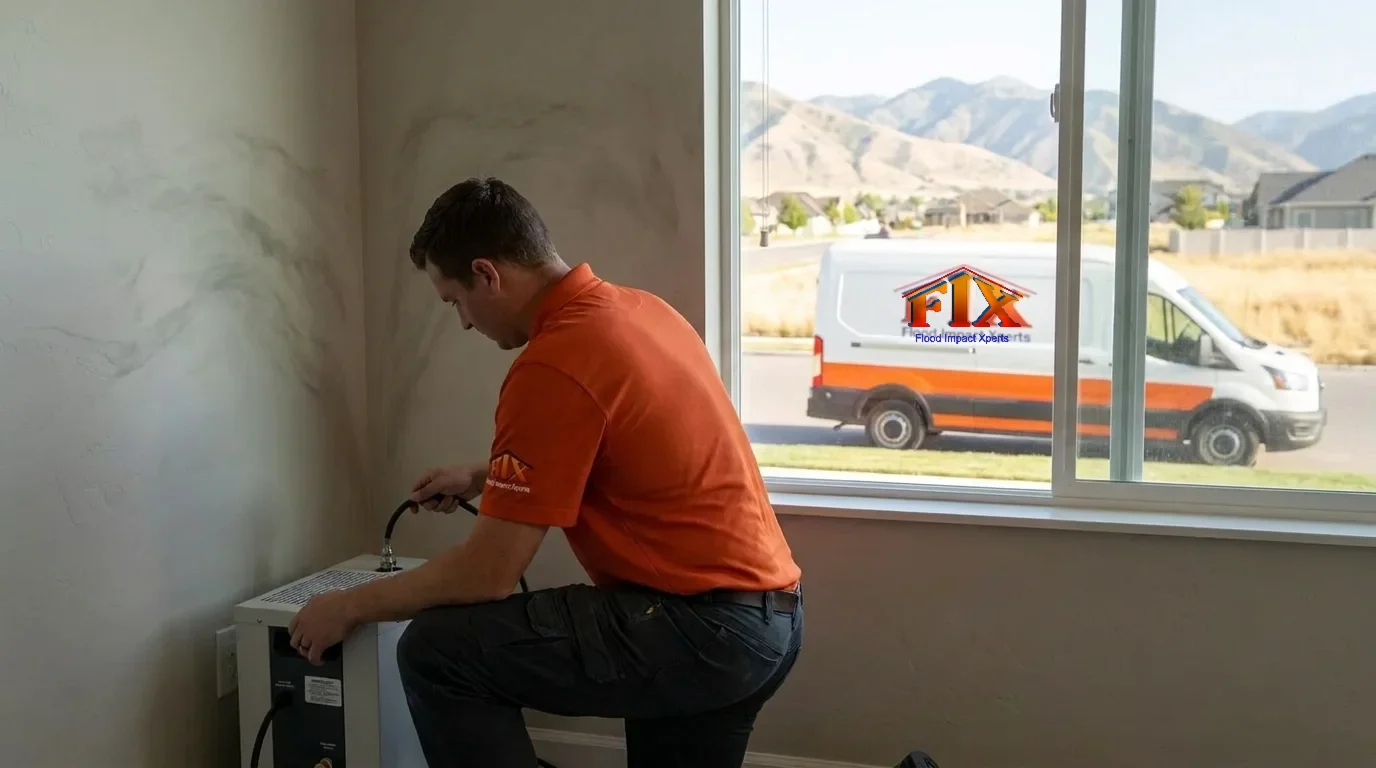
Odor Removal and Deodorization in American Fork
Odor removal and deodorization in American Fork and surrounding areas. Insurance billing accepted. Call (801) 930-9750.
A fire gets put out. A flood gets dried. But the smell lingers, sometimes for weeks, sometimes permanently, if the source isn’t treated at the molecular level. Smoke odor embeds itself in drywall, insulation, and wood framing. Pet urine migrates into subfloor and concrete. Cooking odors from a grease fire saturate HVAC ductwork and re-release every time the system runs. Surface cleaning and air fresheners mask these odors temporarily; professional odor elimination breaks the chemical bond that keeps them there.
What Odor Removal and Deodorization actually involves
Professional deodorization is not a single treatment. It is a sequence of interventions matched to the odor source, the affected materials, and how deeply the odor compounds have penetrated.
Smoke odor from a structure fire requires different chemistry than the ammonia compounds in pet urine or the aldehydes left by a sewage backup. The equipment reflects that. Thermal fogging vaporizes a deodorizing agent into a fog that mimics the behavior of smoke, reaching the same cavities and porous surfaces the original odor penetrated. Ozone treatment generates O3 molecules that oxidize odor compounds on contact, including inside wall cavities and ductwork, though ozone work requires the space to be vacated during treatment. Hydroxyl deodorization uses UV-generated hydroxyl radicals to break down odor molecules and is safe to run in occupied or partially occupied spaces.
For severe losses, more than one method is used in sequence. A smoke-damaged home may go through thermal fogging first, then an ozone treatment of enclosed spaces, then a hydroxyl generator running during the final drying phase. The timeline for professional odor elimination ranges from a single day for a contained, single-room loss to one to two weeks for a whole-structure fire or a property with long-term embedded odors.
Our process
-
Source identification and odor mapping. Before any equipment is deployed, the source material is located and characterized. Odor that appears to come from a wall surface often originates from insulation or framing behind it. HVAC systems are inspected separately, since ductwork can distribute odors through an entire structure even after the primary source is treated.
-
Source removal or encapsulation. Deodorization chemistry cannot permanently neutralize an odor if the source material is still present. Heavily contaminated insulation, carpet, or porous building materials are removed before treatment begins. When removal is not feasible, an encapsulant sealer is applied to lock residual compounds in place.
-
Primary treatment matched to odor type. Thermal fogging is used for smoke and protein odors that have penetrated porous surfaces. Ozone treatment is applied in sealed, unoccupied spaces for broad-spectrum oxidation. Hydroxyl deodorization runs in spaces where occupants or pets need to return sooner. The method, or combination of methods, is selected based on the odor category and the materials involved.
-
HVAC and duct deodorization. Ductwork is treated separately. A deodorizing agent is introduced at the air handler and pulled through the system while it runs, reaching supply and return runs that a fogging wand cannot access directly. Filters are replaced after treatment.
-
Verification and clearance. After treatment, affected areas are re-evaluated. For smoke losses, this includes checking wall cavities and attic spaces where odor compounds can off-gas long after surface treatment. A space that passes the nose test on a cool day may still off-gas when temperatures rise and materials expand.
What separates a good odor removal response from a bad one
The most common failure in odor removal is treating the symptom rather than the source. Ozone and hydroxyl generators are effective tools, but running them over a space that still contains contaminated insulation or unsealed concrete is temporary at best. The odor returns, often within days, because the source is still releasing compounds.
A second common failure is skipping ductwork. HVAC systems pull air from return registers throughout the structure and can absorb smoke, protein, and biological odors into the duct lining and air handler components. A home that smells clean after treatment may begin to smell again the first time the furnace runs if the duct system was not addressed.
Insurance adjusters reviewing odor claims look for documentation of the source material, the treatment method selected, and why. A scope that simply lists “ozone treatment” without identifying what was treated and why that method was chosen is harder to support through the claims process. Thorough photo documentation of source materials, equipment placement, and pre- and post-treatment conditions protects both the homeowner and the claim.
What does Odor Removal and Deodorization cost?
Typical costs for professional odor elimination vary significantly based on the odor source, the size of the affected area, and how deeply the odor has penetrated building materials. Most homeowners pay somewhere in the ranges below, though every loss is different and FIX Restoration provides a written scope before any work begins.
| Scenario | Typical industry range |
|---|---|
| Single room, isolated odor source | $300 – $800 |
| Whole-home hydroxyl or ozone treatment | $800 – $2,500 |
| Smoke odor after a contained fire (1–2 rooms) | $1,500 – $4,000 |
| Whole-structure smoke deodorization with duct treatment | $3,500 – $10,000+ |
| Sewage or biohazard odor with source removal | $1,200 – $5,000 |
| Long-term pet urine with subfloor treatment | $800 – $3,500 |
Homeowners insurance typically covers odor removal when the odor results from a covered peril, such as a fire, burst pipe, or sewage backup. Odors from long-term pet damage or gradual neglect are generally not covered.
Seasonal and regional considerations
Utah’s climate creates specific conditions that affect how odors behave and how long treatment takes. During winter months, homes are sealed tightly and ventilation is minimal, which concentrates odor compounds and slows off-gassing. A smoke or sewage odor that develops in January in an American Fork home may be more severe indoors than the same loss in summer simply because there is nowhere for the compounds to go.
Conversely, summer heat accelerates off-gassing from materials like subfloor, concrete, and wood framing, which means a loss that seemed resolved in cooler months can resurface when temperatures climb. This is especially relevant for pet urine losses, where uric acid crystals reactivate with heat and humidity.
The high desert climate along the Wasatch Front also means that materials dry quickly, which is generally helpful, but it can cause odor compounds to concentrate in the remaining moisture rather than dissipating gradually.
Service area
FIX Restoration is based in American Fork and serves communities throughout Utah County and the surrounding area, including Lehi, Pleasant Grove, Lindon, Orem, Provo, Highland, and Cedar Hills. City-specific pages for odor removal and deodorization in each community link back here for full service details.
If you are dealing with a persistent odor and are not sure whether it warrants professional treatment, call (801) 930-9750. Describe what you are smelling and when it started, and we can help you determine whether source removal, deodorization equipment, or both are the right next step.
Ready to stop masking the smell and actually eliminate it? Call FIX Restoration at (801) 930-9750 to schedule your odor assessment and get a written scope before any work begins.
Services We Handle
- Smoke Odor Removal
Frequently Asked Questions
Does homeowners insurance cover odor removal and deodorization?
What is the difference between ozone treatment and hydroxyl deodorization, and which one do I need?
Why does the smoke smell come back a few days after I thought it was gone?
How does thermal fogging work, and what types of odors is it used for?
Can odor removal be done while we are still living in the house?
Looking for the best odor removal and deodorization company in American Fork?
FIX Restoration provides odor removal and deodorization in American Fork, UT and the surrounding area, and has served local property owners since 2012. Customers rate us 4.9 out of 5 stars across 558 Google reviews. We answer calls 24/7 — call (801) 930-9750 for immediate help.
Need Odor Removal and Deodorization now?
We respond 24/7 across American Fork and surrounding UT cities.
Related Coverage
- Our Restoration Services
- Contact FIX Restoration
- Odor Removal and Deodorization in Alpine
- Odor Removal and Deodorization in Bluffdale
- Odor Removal and Deodorization in Cedar Fort
- Odor Removal and Deodorization in Cedar Hills
- Odor Removal and Deodorization in Cottonwood Heights
- Odor Removal and Deodorization in Draper
- Odor Removal and Deodorization in Eagle Mountain
- Odor Removal and Deodorization in Herriman
- Odor Removal and Deodorization in Highland
- Odor Removal and Deodorization in Lehi
- Odor Removal and Deodorization in Lindon
- Odor Removal and Deodorization in Orem
- Odor Removal and Deodorization in South Jordan
- Odor Removal and Deodorization in Riverton
- Odor Removal and Deodorization in Spanish Fork
- Odor Removal and Deodorization in Pleasant Grove