
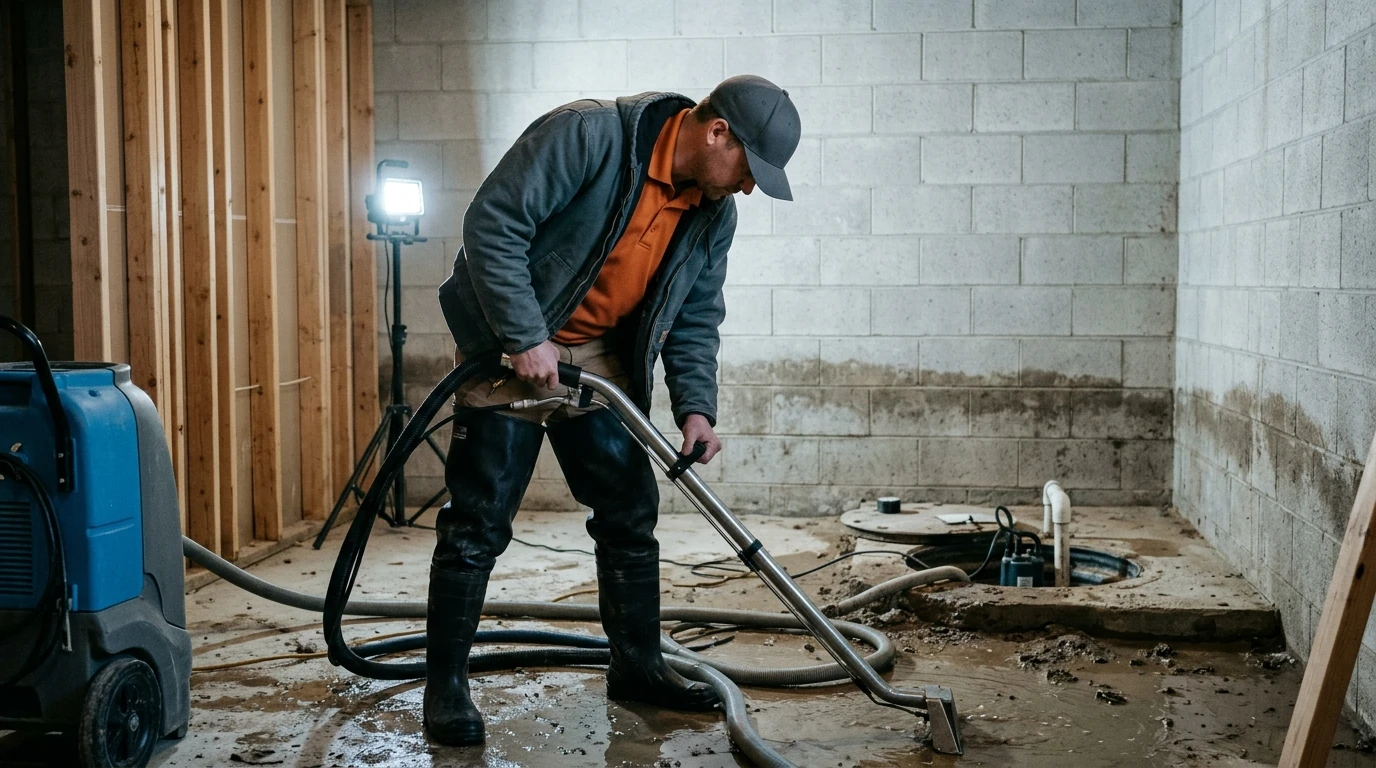
For a flooded basement in American Fork, call FIX Restoration at (801) 930-9750. The company answers 24/7 and has built a 4.9-star rating across 557 Google reviews handling water and flood cleanup across Utah County, including the sump pump failures and spring runoff events that hit American Fork basements every year.
If you’re standing at the top of your basement stairs right now looking at an inch of water spreading across the carpet, you don’t need a long explanation, you need to know what order to make calls in. A failed sump pump during spring snowmelt off the Wasatch Front, a window well that overflowed in a downpour, or groundwater pushing through a foundation crack all look similar from the top of the stairs, but they call for different first moves. Here’s the order that protects your home and your insurance claim.
Who do I call first, a restoration company or a plumber?
Call a restoration company first unless water is actively flowing from a visible broken pipe or fitting, in which case shut off the water supply before anything else. Most basement floods in American Fork come from groundwater, a failed sump pump, or a backed-up drain, none of which a plumber’s visit will stop or dry out.
A plumber is the right first call only when the source is a plumbing failure you can see and isolate, like a burst supply line to a basement sink or a water heater. Shut off the main or the fixture valve, then call the plumber to fix the pipe. The standing water and the wet drywall, subfloor, and insulation still need extraction and structural drying, which is restoration work, not plumbing work. Ignoring that step is how a one-day flood turns into a two-week mold problem (see the EPA’s guidance on how fast mold establishes in wet materials).
If the water involves downed power lines, a gas smell, or standing water near an electrical panel, call 911 or your utility company before anyone goes back into the basement.
Is basement flood water Category 1, 2, or 3, and why does it matter?
Most basement floods in American Fork are Category 2 or 3 water, not the clean Category 1 water most homeowners picture. The category determines what gets dried in place and what has to be removed and replaced.
Groundwater seeping through a foundation wall or crack is classified as Category 2, gray water, under the ANSI/IICRC S500 standard. It’s significantly contaminated and porous materials it touches, carpet pad, baseboards, drywall below the waterline, typically get removed rather than dried. Water backing up through a floor drain or any sewer line is Category 3, black water, and it requires antimicrobial treatment and full PPE for anyone handling it, regardless of whether sewage is visible. Never treat a sewer or drain backup as anything less than Category 3.
This distinction matters for your health and your cleanup plan: wet-vacuuming gray or black water yourself and running a box fan is not adequate protection against the contamination involved, and it won’t stop mold from establishing within 24 to 48 hours on wet drywall and framing.
What happens when I call about a flooded basement?
A call about active basement flooding starts with a few quick questions, source of the water, how deep it is, and whether power is still on in the basement, so the crew arrives with the right equipment already loaded. Extraction and containment typically begin within the first hour of arrival in the American Fork area.
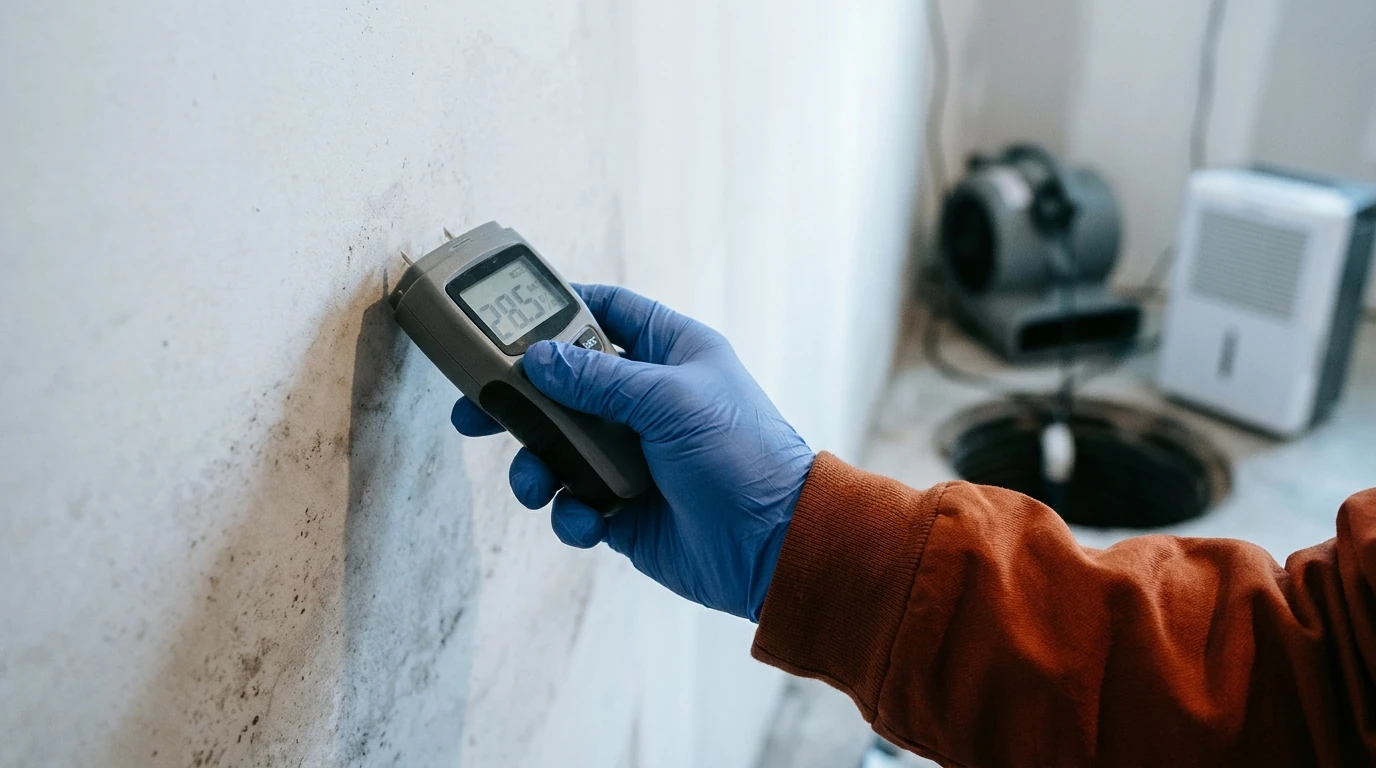
On site, the first priority is getting standing water out with truck-mounted or portable extraction units, then setting moisture meters against the drywall, subfloor, and framing to map how far the water traveled, often farther than it looks from the surface. Air movers and dehumidifiers go in next to begin structural drying, and any materials that can’t be salvaged under the applicable water category get removed at that stage, not weeks later when mold has already taken hold.
Throughout, the crew documents everything with photos and moisture readings, which becomes the paper trail your insurance adjuster will ask for. For the fuller first-24-hours checklist, see What To Do in the First 24 Hours After Water Damage.
Does homeowners insurance cover a flooded basement?
It depends entirely on the source of the water and whether your policy has a water backup endorsement. A standard homeowners policy generally does not cover flood water from outside the home or a sump pump failure or sewer backup unless you’ve added that specific endorsement.
Sudden, accidental water damage from a burst supply line inside the home is typically covered under a standard policy. But a sump pump that fails and lets groundwater in, or a sewer line that backs up into the basement, is excluded from most standard policies and only covered if you purchased a sewer and sump pump backup endorsement separately. Surface water and rising groundwater without that endorsement generally falls to flood insurance through the National Flood Insurance Program, not a homeowners policy at all. Check your declarations page for the word “endorsement” next to water backup coverage before you assume anything is covered, and see Utah’s Insurance Department guidance on home claims for how the claims process works in this state. For the general rules on what a standard policy does and doesn’t cover, see Does Homeowners Insurance Cover Water Damage?
Because coverage hinges on documenting the source and timeline precisely, get the moisture readings and photos from your mitigation company before you file, not after.
A flooded basement rarely waits for business hours, and the first call you make decides how much of the house you save. Shut off the source if it’s a visible plumbing failure, get extraction and drying started immediately, and loop in your insurer the same day with documentation in hand.
About FIX Restoration
FIX Restoration has served American Fork and the rest of Utah County since 2012. The company is licensed and insured, operates 24/7, and handles basement flooding, flood damage restoration, emergency water removal, and sewage cleanup, among other restoration services, for homeowners along the Wasatch Front. This post was written with input from the FIX Restoration team, led by Scott Noland.