
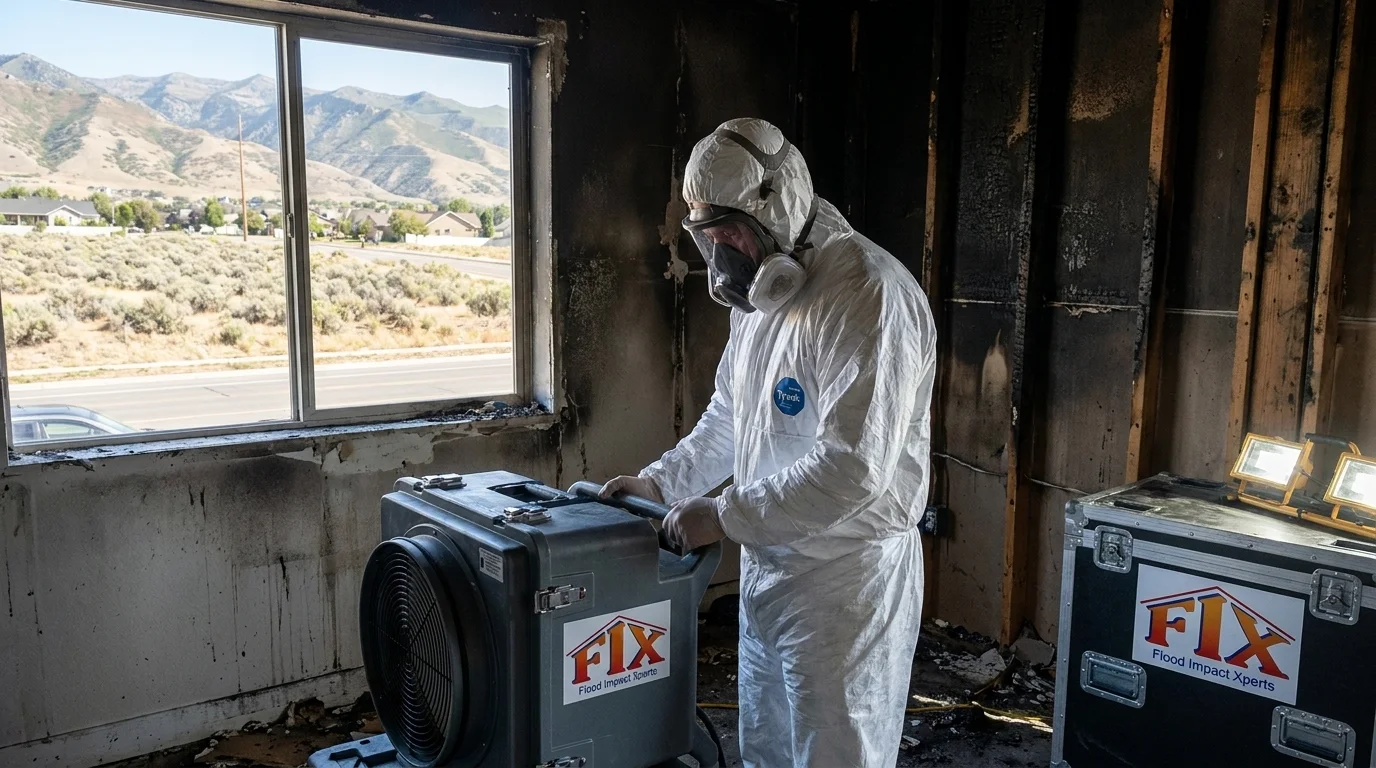
Emergency Fire Damage Restoration in Cottonwood Heights
Emergency fire damage restoration in Cottonwood Heights, UT. Insurance billing accepted. Call (801) 930-9750.
Our technicians are dispatched from our American Fork, UT headquarters and are typically on-site in Cottonwood Heights within 60 minutes of your call.
Fire damage emergency in Cottonwood Heights? Call now for emergency service. Our crew responds fast to secure the property and start the recovery.
Cottonwood Heights sits at the foot of the Wasatch Range, where dry canyon winds funneling down from Big Cottonwood and Little Cottonwood canyons can push a structure fire through a home faster than in most Front Range communities. That same low humidity that makes Utah winters feel manageable also means smoke particles travel farther, penetrate deeper into porous materials, and leave odor compounds locked into insulation and framing long after the visible char is gone. When fire damage hits a home in this city, the restoration work has to account for conditions that are genuinely different from the valley floor.
Why Cottonwood Heights Homes Present Specific Fire Damage Challenges
Much of the residential construction in Cottonwood Heights dates from the 1960s through the 1980s, an era when builders used open-soffit framing, single-pane windows, and attic insulation that was blown or batted rather than spray-foamed. Fire and smoke move through these older construction assemblies differently than through tightly built modern homes. Smoke infiltrates attic cavities quickly, and once it reaches blown cellulose or fiberglass batt insulation, the odor compounds bind to fibers in a way that surface cleaning cannot address. Full attic insulation removal and replacement is a more common scope item here than in newer subdivisions.
The canyon-corridor winds also matter for exterior fire damage. Ember cast from a neighbor’s burning deck or a hillside brush fire can land on wood shake or aging composite roofing and smolder for hours before igniting. Homes on the eastern edges of the city, closer to the canyon mouths, see this pattern more than properties farther west toward the valley. Structural assessments after any fire in those areas need to include the roof deck and attic framing, not just the interior rooms where flames were visible.
The Fire Damage Restoration Process in Cottonwood Heights
The first step on any fire loss is a thorough structural and smoke assessment before any cleaning begins. Soot is not uniform: wet soot from smoldering fires and dry soot from fast-burning fires require different chemical treatments, and mismatching the chemistry makes odor and staining worse, not better. Once the scope is clear, the process moves through board-up and tarping of any breached openings, debris removal, structural drying if suppression water is present, soot and smoke residue cleaning on all affected surfaces, and finally odor neutralization using thermal fogging or hydroxyl generation depending on what the structure can tolerate.
In Cottonwood Heights specifically, the permitting process through Salt Lake County matters at the reconstruction phase. Any structural repairs, electrical work, or HVAC replacement will require county permits and inspections before walls can be closed. Starting that paperwork early, often while cleaning is still underway, keeps the overall timeline from stretching unnecessarily.
Reaching Cottonwood Heights from American Fork
FIX Restoration operates out of American Fork, and the primary route to Cottonwood Heights runs north on I-15 and then east on I-215, typically reaching the city in well under an hour under normal traffic conditions. For properties in the upper elevations near the canyon entrances, the approach via Wasatch Boulevard or Fort Union Boulevard adds a few minutes but keeps the route straightforward. When you call (801) 930-9750, the team can give you a realistic arrival window based on current conditions rather than a number that assumes an empty freeway.
Working with Insurance on a Cottonwood Heights Fire Loss
Fire claims in Utah are handled under standard homeowners policies, but the scope of a fire loss in an older Cottonwood Heights home can grow quickly once adjusters see what smoke has reached. Contents documentation, structural photo documentation, and a written scope of work that separates cleaning from reconstruction costs all help the claim move efficiently. FIX Restoration works directly with insurance carriers to document the loss in the format adjusters need, which reduces the back-and-forth that slows settlements.
If your home is in an area with an HOA, check your CC&Rs before any exterior work begins. Some HOA agreements in Cottonwood Heights require approval for visible repairs like roof tarping or board-up materials, and getting that communication started early avoids a separate dispute on top of an already stressful situation.
Local Note
Homes in Cottonwood Heights built during the 1970s frequently used a textured ceiling finish applied over a thin gypsum board that was not taped and mudded to modern standards. After a fire, smoke and suppression water can cause this ceiling assembly to delaminate in sections that look structurally sound from below. During assessment, probing these ceilings before committing to a cleaning-only scope can prevent a situation where odor returns weeks later because contaminated material was left in place. It is a detail that matters more here than in newer construction and one worth flagging with your restoration team from the first walkthrough.
If your Cottonwood Heights property has been affected by fire or smoke, the window for limiting secondary damage is short. Call FIX Restoration at (801) 930-9750 to schedule an assessment and get a clear picture of what the restoration scope actually involves.
Serving Cottonwood Heights from our American Fork headquarters — ★ 4.9 · 558 Google reviews
“Very responsive & willing to check whatever was a concern. Didn’t try to push anything unnecessary. Trustworthy.” — Janean, August 2026
Fire Damage Restoration in Cottonwood Heights: Service Coverage
Frequently Asked Questions
How fast can you arrive for fire damage restoration in Cottonwood Heights?
How does the dry canyon wind climate in Cottonwood Heights affect smoke damage in my home?
Are older homes in Cottonwood Heights more likely to need full attic remediation after a fire?
Does Salt Lake County permitting affect how long fire damage reconstruction takes in Cottonwood Heights?
What is the difference between thermal fogging and hydroxyl generation for smoke odor, and which is used in Cottonwood Heights homes?
How should I document a fire loss in my Cottonwood Heights home before the restoration crew arrives?
Will my homeowners insurance cover fire damage restoration in Cottonwood Heights?
Fire Damage Restoration response in Cottonwood Heights
Most Cottonwood Heights calls see a technician on-site within 60 minutes from our American Fork headquarters.