
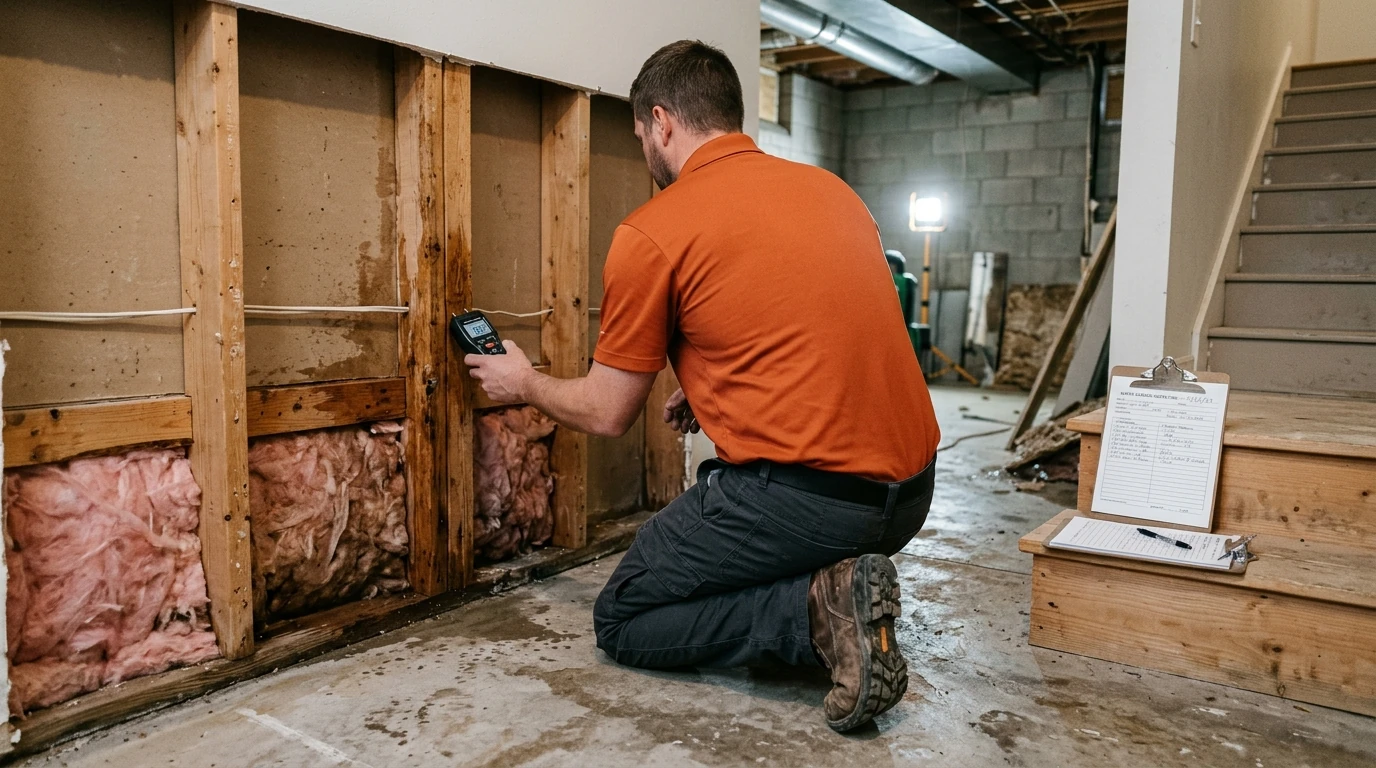
TL;DR: Basement flood cleanup in American Fork typically costs between $800 and $20,000, depending on whether the basement is finished, how contaminated the water was, and how much material has to come out. A small unfinished basement with a clean water leak and no demolition often lands under $2,200. A finished basement with a sewage backup or several days of standing water can run $10,000 to $22,000 once flood-cut drywall, insulation, and flooring replacement are included.
If water showed up in your American Fork basement overnight, from a failed sump pump, a split supply line, or groundwater pushing up through the slab during spring runoff off American Fork Canyon, the first real question is what this is going to cost. The honest answer depends less on the square footage of the room and more on what kind of water it was, how long it sat before anyone pulled it out, and whether the basement was finished. Below are real cost ranges by scenario, where homeowners insurance typically helps, and where it doesn’t.
Basement Flood Cleanup Cost by Job Size in American Fork
Basement flood cleanup generally falls into five pricing tiers, from a same-day extraction and dry-out on a bare slab to a full tear-out and rebuild after a sewage backup. The water category and how much material has to be removed drive the range far more than the room’s square footage.
| Scenario | Typical Cost Range |
|---|---|
| Unfinished basement, clean supply-line water, extraction and drying only, no demo | $800 - $2,200 |
| Unfinished basement, groundwater seepage, minor flood cut on lower drywall and insulation | $1,800 - $4,500 |
| Finished basement, carpet and pad removed, baseboards and a 2-foot flood cut, standard drying | $3,500 - $8,000 |
| Finished basement, Category 2 or 3 water, full wall demo to the flood-cut line, antimicrobial treatment | $6,000 - $14,000 |
| Large or long-standing loss (sewage backup, multiple rooms, water sitting for days) | $10,000 - $22,000+ |
| Rebuild after demo (drywall, paint, flooring, trim) separate from mitigation | $10 - $45 per sq ft |
The rebuild line is its own project. Mitigation (extraction, drying, demo) and reconstruction are usually billed separately, even when the same company handles both. For a full breakdown of American Fork rebuild pricing by finish level, see our reconstruction services page and the companion guide on water damage repair costs in American Fork.
What Actually Changes the Price?
Four things move a basement flood bill more than anything else: the water’s category, how long it sat before extraction, whether the basement was finished, and ceiling height.
Water category. Clean water from a supply line (Category 1) is the cheapest to handle, since materials can often be dried in place rather than removed. Groundwater seeping through a foundation under hydrostatic pressure is Category 2, and it almost always means removing baseboards and some drywall even if the water looks clear. Sewage or any backup from a floor drain or sewer line is Category 3, also called black water, and it requires removing porous materials, antimicrobial treatment, and PPE, which adds cost. The ANSI/IICRC S500 standard is the industry reference most restoration companies use to classify water and set drying protocols.
Dwell time. Water that sat for six hours costs less to remediate than water that sat for three days. Materials absorb more, mold risk goes up, and more has to come out.
Finished vs. unfinished. An unfinished basement with a concrete floor and exposed studs is the cheapest scenario because there’s little to remove. A finished basement with carpet, pad, drywall, paint, and baseboards multiplies both the demo and the rebuild.
Local groundwater conditions. Basements built into the bench near the foothills below Mount Timpanogos, and older homes closer to American Fork’s Main Street, see more seasonal hydrostatic pressure during spring snowmelt than newer slab-on-grade construction in flatter areas. That groundwater pressure is a recurring cause of Category 2 seepage in this market, separate from a plumbing failure.
Does Homeowners Insurance Cover a Flooded Basement?
Most standard homeowners policies cover a basement flood caused by a sudden, accidental event inside the home, such as a burst supply line or a failed water heater, but they exclude flood water and usually exclude sewer or sump pump backup unless you’ve added a specific endorsement.
That distinction matters because the three most common causes of a flooded basement sit on different sides of it. A burst pipe is typically covered. Groundwater or surface water entering the basement is legally flood damage and is not covered by a standard homeowners policy; it requires a separate flood policy through the National Flood Insurance Program. A sewer backup or a sump pump that fails and lets water back up is also excluded from most standard policies unless you carry a water backup endorsement, which is a separate add-on, not automatic.
Document everything regardless: photos before cleanup starts, the source of the water if known, and receipts for any emergency mitigation. Utah’s Insurance Department has a consumer guide to home insurance claims that walks through what to expect from an adjuster. If you’ve already been through a similar claim question on the plumbing side, our water damage restoration cost guide for Utah covers the same coverage gaps in more detail.
What Happens During Basement Flood Cleanup?
A basement flood job generally moves through five steps, and understanding them is part of understanding where the cost comes from.
- Extraction. Standing water is pumped and vacuumed out, usually within the first hour or two of arrival.
- Assessment and category determination. A technician identifies the water source and category, which decides how much material has to be cut out versus dried in place.
- Controlled demolition (if needed). For Category 2 or 3 water, or anything that sat long enough to saturate drywall, a flood cut removes wet material up to a set height, usually a foot or two above the visible waterline.
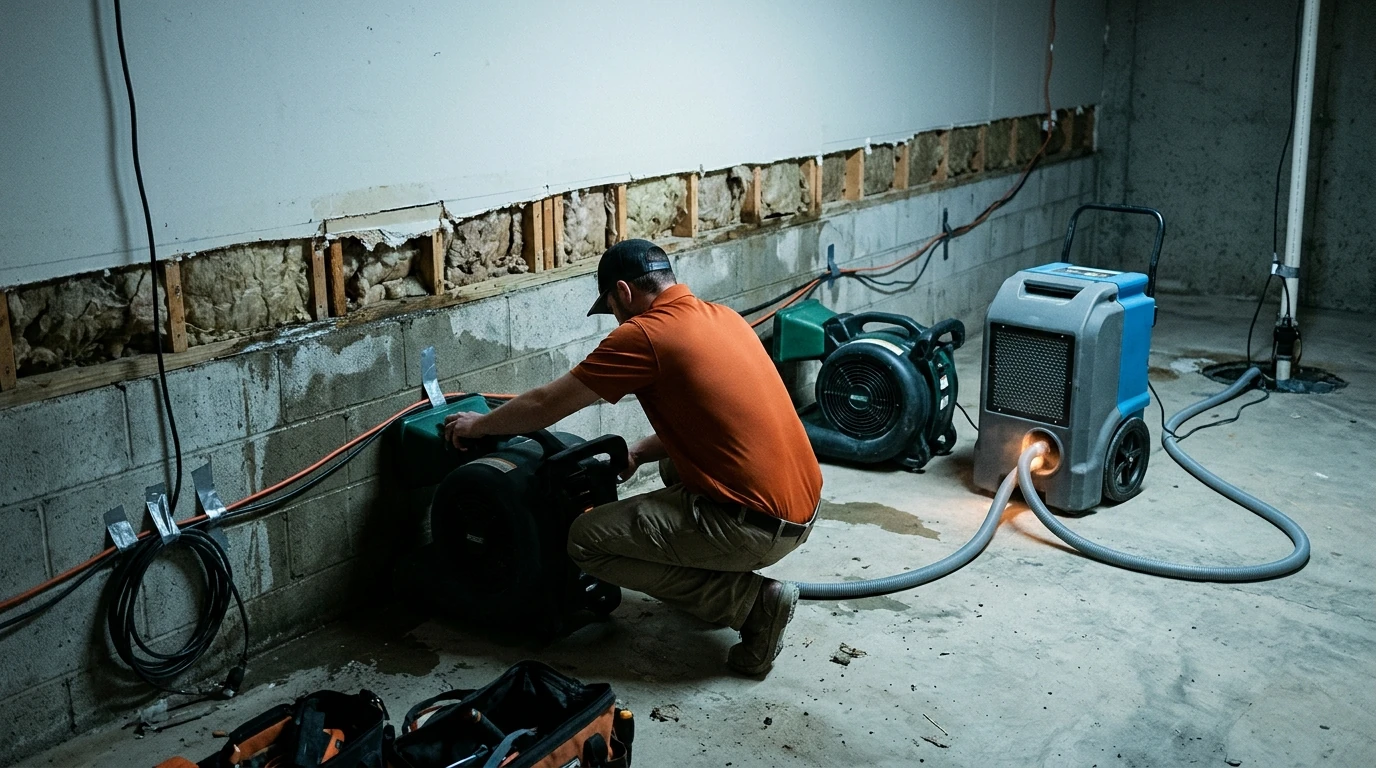
- Drying and monitoring. Air movers and dehumidifiers run for roughly three to five days, with moisture readings taken daily until studs and subfloor hit a dry standard.
- Antimicrobial treatment and rebuild. Category 2 and 3 losses get an antimicrobial application before anything is closed back up. Rebuild (drywall, paint, flooring, trim) follows once drying is verified.
Equipment rental for a typical basement, a few air movers plus a dehumidifier, runs roughly $150 to $400 a day when billed separately, which is why a three-day dry-out costs noticeably less than one that drags into a second week because of a delayed start.
When Does a Flooded Basement Need a Professional, Not a Wet Vac?
Call a professional immediately if the water sat more than 24 hours, if it came from a sewer or drain, or if outlets or an HVAC return were submerged. The EPA notes mold can begin growing on wet materials within 24 to 48 hours, so the clock matters more than the volume of water.
A shallow puddle from a clean supply line that’s caught within an hour is often manageable with a wet vac and fans. Anything involving sewage, groundwater, or standing water deep enough to reach drywall is a job for commercial-grade extraction and drying equipment, not a rental shop vac.
If your basement has already flooded and you’re trying to figure out next steps before calling your insurance agent, Call FIX Restoration at (801) 930-9750 for a scope of the damage and a written estimate before any work starts.
About FIX Restoration
FIX Restoration has served American Fork and the surrounding Utah County communities, including Provo, Orem, Lehi, and Pleasant Grove, since 2012. The company is licensed and insured in Utah and holds a 4.9 Google rating from 557 reviews. Crews handle water damage restoration, flood damage restoration, basement flooding cleanup, sewage cleanup, mold remediation, fire and smoke restoration, reconstruction, and general contracting across Utah County.