TL;DR: The right commercial mold remediation company for an American Fork office, retail space, or warehouse is judged on containment protocol, independent clearance testing, and clear insurance documentation, not just fast turnaround. Ask for a written scope before any demolition, confirm how work will be scheduled around your business hours, and verify commercial liability coverage. FIX Restoration, licensed and insured and operating in Utah County since 2012, works from this exact checklist on commercial mold jobs.
If a tenant just reported a musty smell in a back office, or your warehouse crew found dark staining along a loading-dock wall after last spring’s roof leak, you’re probably doing what every property manager does next: searching for a commercial mold remediation company and trying to figure out which one actually knows how to work in an occupied building. A commercial job is not a bigger version of a residential one. It has to account for tenant leases, posted business hours, multiple HVAC zones, and sometimes a certificate of occupancy that depends on passing a clearance test before anyone moves back in. Here’s what separates a company built for that from one that just quotes a price over the phone.
What should a commercial mold remediation company have before you sign a contract?
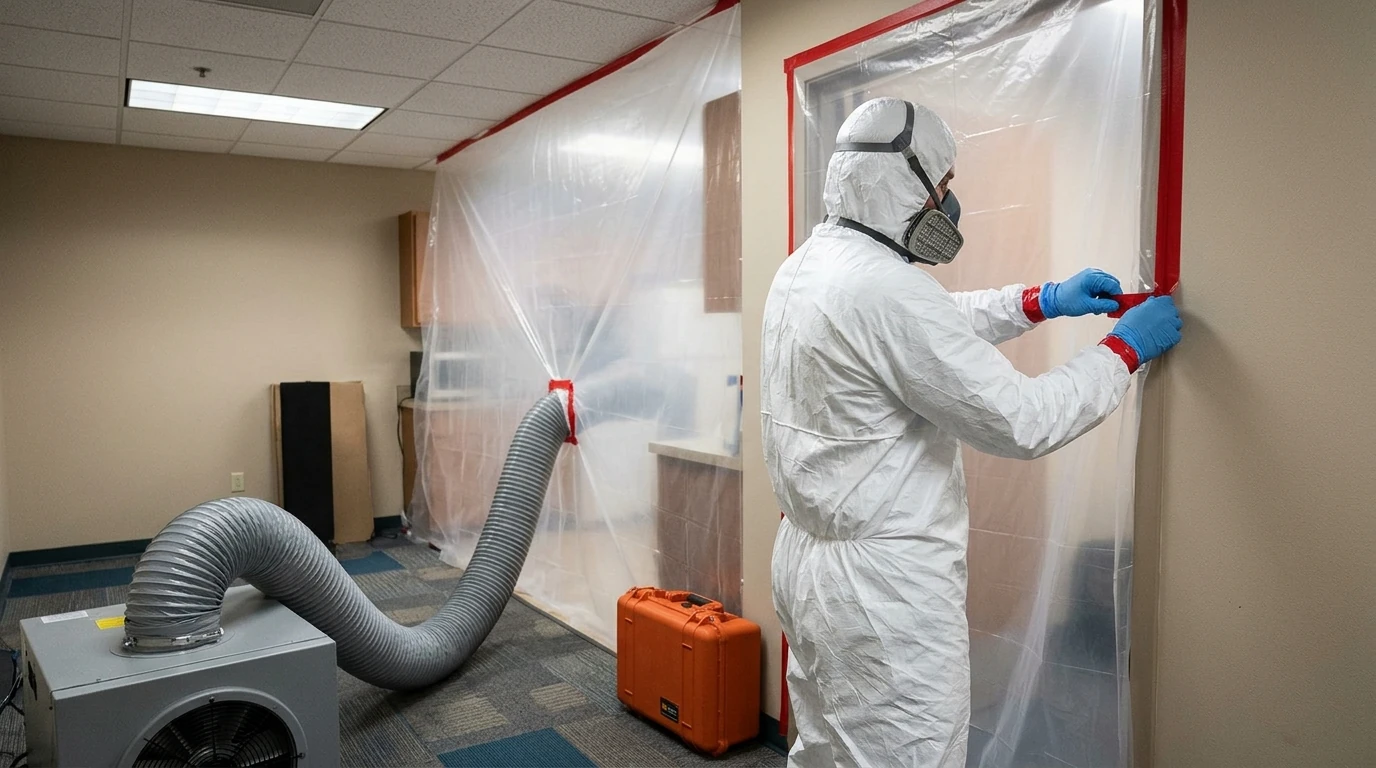
A commercial mold remediation company should carry liability insurance sized for a commercial loss, provide a written scope of work before any demolition starts, and be able to explain exactly how it will isolate the work area from the rest of your occupied building. If a company can’t answer those three things in the first phone call, keep calling.
The industry reference point for this work is the ANSI/IICRC S520 Standard for Professional Mold Remediation, which lays out containment levels, personal protective equipment, and clearance criteria based on the size and condition of the affected area. A company that can speak specifically about which containment level applies to your square footage, and why, is further along than one reciting a generic process.
FIX Restoration is licensed and insured, has operated out of Utah County since 2012, and holds a 4.9-star Google rating across 557 reviews from residential and commercial customers across American Fork, Lehi, Orem, and Provo. Property managers can verify any of that directly before deciding who gets the keys to a tenant space.
How is mold remediation in an office, retail space, or warehouse different from a residential job?
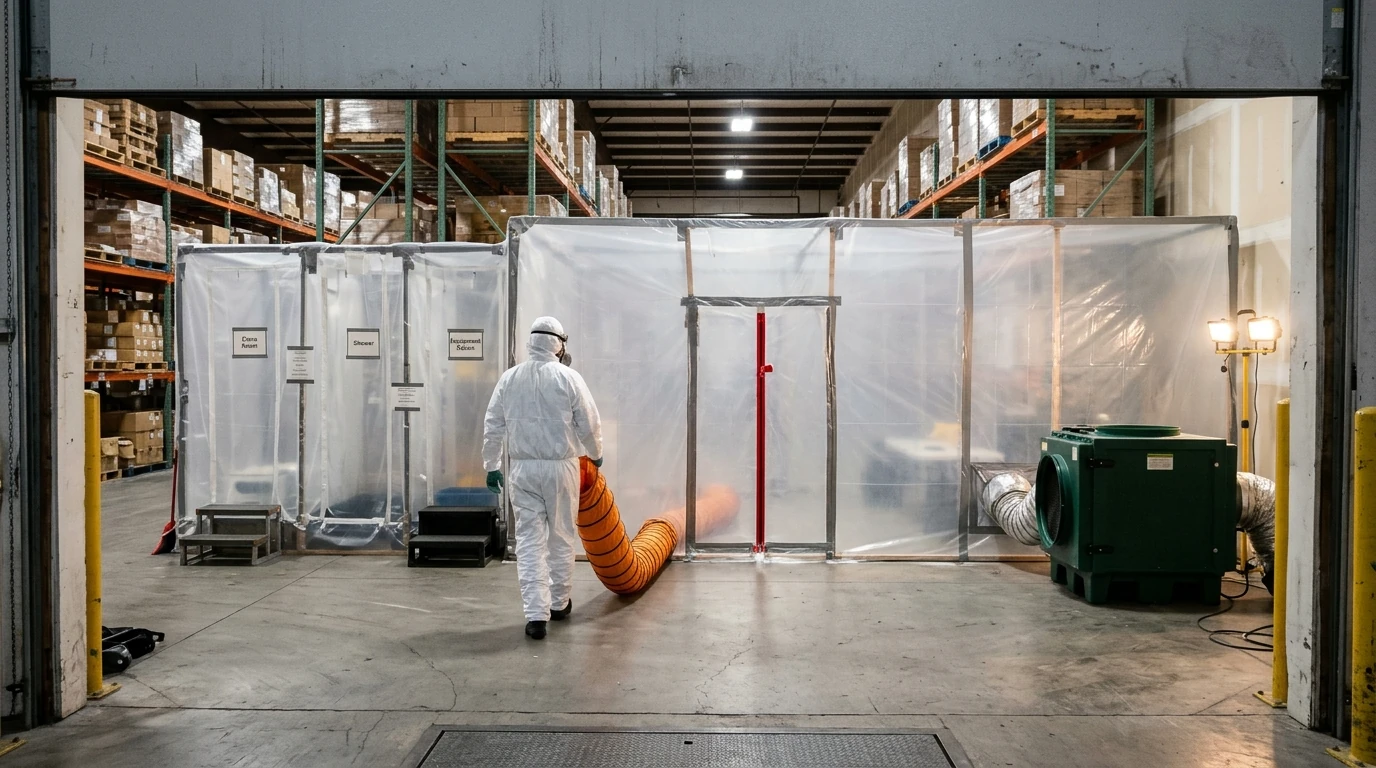
Commercial mold work differs from residential work mainly in scale, containment complexity, and scheduling, not in the underlying technique. A 200-square-foot bedroom closet and a 2,000-square-foot warehouse bay both follow the same S520 principles, but the second one needs a bigger containment wall, a dedicated decontamination chamber, and a plan for the HVAC zones feeding adjoining tenant spaces.
Multi-tenant buildings add another layer: a leak in one suite’s ceiling can push moisture into a neighboring unit’s drop ceiling, and a remediation crew needs to check both sides before calling the job scoped correctly. Retail spaces bring inventory and fixtures that have to be moved or protected, not just drywall and studs. Warehouses bring pallet racking, forklift traffic, and sometimes a loading dock that can’t be shut down for a week.
If your facility also had standing water or a roof failure before the mold showed up, it’s worth reading how mold remediation costs typically run in American Fork, since the water event usually drives the scope of the mold job that follows.
What does keeping a business open during remediation actually involve?
Keeping a business open during remediation usually means phased, off-hours work behind sealed containment barriers so the rest of the building keeps operating normally. A commercial crew builds negative-air containment around the affected area, runs a HEPA air scrubber to hold pressure inward, and schedules the noisiest or most disruptive work overnight or on weekends when foot traffic is lowest.
For a retail space, that might mean working one stockroom section at a time while the sales floor stays open. For an office suite, it often means isolating one wing with temporary partitions while staff keep using the rest of the floor. A good commercial mold remediation company will walk this schedule through with you before signing anything, including how long each phase takes and what access you lose during it.
What is independent clearance testing, and why does it matter?
Independent clearance testing means a third-party industrial hygienist, not the remediation company, confirms the space is safe to reoccupy once the work is finished. This typically involves air sampling (spore trap or similar) and sometimes surface samples, compared against outdoor baseline readings, with a written clearance report.
Using a third party for this step matters because a remediation company grading its own work creates an obvious conflict of interest. A clearance report from an independent hygienist is also what most landlords, insurers, and tenant attorneys want to see before anyone signs off on the space being clean. A reputable commercial mold remediation company will tell you this upfront and help coordinate the independent test, rather than offering to “test it themselves” as a shortcut.
What should you ask before hiring?
Before hiring a commercial mold remediation company, a property manager should ask these six questions:
- What containment level does the ANSI/IICRC S520 standard call for at this square footage, and why?
- Who performs clearance testing, and is that party independent of your company?
- Can the work be scheduled around our posted business hours or lease restrictions?
- What’s included in the written scope, and how are change orders handled if hidden damage turns up?
- Can you provide proof of commercial liability coverage before work starts?
- What documentation do you provide for an insurance claim, and in what format?
A company that answers all six without hesitation has done this before. One that gets vague on clearance testing or documentation hasn’t.
What does insurance documentation for a commercial mold claim actually look like?
Insurance documentation for a commercial mold claim typically includes dated photos of the affected area, moisture readings showing the extent of the problem, a written scope of work tied to those readings, and the independent clearance report once remediation finishes. Commercial property policies usually limit or cap mold coverage, and that coverage usually applies only when the mold traces back to a covered sudden loss, such as a burst supply line or a storm-related roof failure, not to long-term leaks or deferred maintenance. The EPA’s guidance on mold is a useful plain-language reference for property managers who want to understand the underlying moisture problem, separate from the insurance question. Every policy and every claim is different, so confirm the specifics with your carrier before assuming anything is covered.
A commercial mold remediation company that builds its scope and photo documentation around what an adjuster will actually ask for saves a property manager weeks of back-and-forth later.
If you’re weighing bids right now, run each one through the checklist above before the price. Call FIX Restoration at (801) 930-9750 to request a written scope for your property, or start with a mold inspection if you’re not yet sure of the extent.
About FIX Restoration
FIX Restoration has operated in Utah County since 2012, with offices in American Fork and West Jordan serving businesses and homeowners across American Fork, Provo, Orem, Lehi, and the surrounding region. The company is licensed and insured, available 24/7, and holds a 4.9-star Google rating across 557 reviews. Its crews handle mold remediation, commercial restoration, water and fire damage restoration, reconstruction, and related services across Utah County.